Dark #writephoto

dark-hills

When Night Fairy descends
Decked in dark shimmering robes
Disseminating light and love
We look at the moonless sky
Whispering symphony of lullabies.
© Balroop Singh

Inspired from Sue Vincent’s #photoprompt. Thank you dear friend.

If you have liked this poem, please share it at your favorite social networks.
Thank you for your support. Please add your valuable reflections, they are much appreciated.

I Know You

I know you well
I know how you barge in
With your muffled face
To rob us of our happy days

I know your icy fingers are eagerlySounds of death
Whetting their nails
To dig deeper into my veins
I have just one request…

Come softly…tiptoe into my room
Clasp me gently in my sleep
I know you are not so nice
But you can’t be cruel to me twice.

Come when the sky is soft pink
I may not be awake to see
My soul would soak in the beauty
And leave this earth with good memories

My truce with you doesn’t speak of love
You know I hate you
I have always hated since you
Deprived me of my childhood!
© Balroop Singh

If you have liked this poem, please share it at your favorite social networks.

Thank you for your support. Please add your valuable reflections, they are much appreciated.

More poems for Poetry Lovers.

Why Are #YoungMinds So Vulnerable?

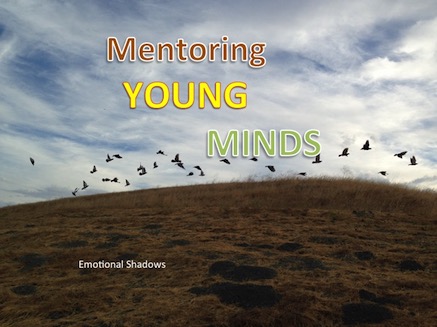
Mentoring Young Minds
Why is it so difficult to guide teenagers?

Why do they drift away and want to take their own decisions?
Why do they trust their peer group more than their best well- wishers?
How can they be easily influenced and manipulated by antagonists?

While parents and teachers dismiss all that as irresponsible and immature behavior, it is not very easy to understand a young mind. Psychologists have been trying to do that for many years.

Researchers believe that human brain development continues till the age of 25. The complex changes that the brain undergoes make them volatile and vulnerable. Youngsters crave individualism, freedom and self-regulation but are prone to risky behavior during this growth. Their patience and self-control is not fully developed. They can’t think of the consequences.

According to Dr. Frances Jensen, a Neuroscientist, “Teenagers make much more sense when you understand that the frontal lobes of the brain – the part responsible for judgment, impulse control, mood and emotions – is the last part to fully develop. So the brain just doesn’t know how to regulate itself yet. They’re like Ferraris with weak brakes.”

Ironically when they need their parents the most, they lose connection with them. We too are responsible for this disconnect.

What alienates them?

    1. Lack of understanding by parents: While teenagers are trying to cope up with physical and emotional upheavals within them, all they need is love and assurance that they are good enough. Most of them change, adapt and respond in a positive manner but those who don’t get the right environment seek it elsewhere.
    2. Excessive control: All they need at this stage is patient hearing. The quest to explore and experiment is the highest at this phase of life. If the rules and regulations are too crippling, youngsters take pleasure in flouting them. Setting the boundaries may be essential but one has to be flexible at times and give some freedom otherwise they become rebellious.
    3. Criticism: Teenagers are very sensitive and self-conscious. Criticism affects them deeply and they might retract into their own shell, stop sharing their thoughts and desires and could develop a low self-esteem. Such minds never come out of their developmental trauma and might react violently.
    4.  High expectations: I have seen many high school students struggling to come up to the expectations of their parents and choosing the subjects due to parental or peer pressure. In an attempt to please their parents or accomplish the dreams of their fathers, they lose their own personality.
    5. Neglect: Children, who grow up in dysfunctional families or those who have not received basic emotional support at an impressionable age, carry a baggage of unspoken words, which drag them deeper into an abyss of darkness. They always carry grudges in their heart against the world and become insensitive and apathetic. All they need is help though they are unwilling to accept it.

How can we help?

  • Provide them with safe and loving environment at home
  • Early bonding through open discussions
  • Listen to them calmly and patiently
  • Avoid criticism of their ideas and friends
  • Encourage regular exercise and creative channelization of energy
  • Encourage adequate rest and sleep
  • Avoid coercing them for career goals
  • Avoid stressful talk
  • Talk about your expectations calmly and logically.

Role of teachers:Children are like clay

Teachers are the role models for students. A kind and an affectionate word for the most unruly student attracts his attention and he leans towards the teacher who has a sympathetic attitude towards him. I have seen the toughest ones melt into tears of remorse when I tried to delve deeper, to probe into the causes of their violent behavior.

Little disappointments seem gigantic to teenagers. Teachers can convert those moments of disenchantment into stepping-stones by talking them out of negativity. A good teacher can also become a counselor, as she/he understands students better than parents. Teenagers feel more comfortable in sharing their problems with their teachers.

Young minds can be molded into positive and responsible individuals but the onus lies on us.

Thank you for reading this. Please share your valuable reflections, as they are much appreciated.

If you have liked this post, please share it at your favorite social networks.

Balroop Singh.

What Is The Best Apology?

Real apology
There are two kinds of apologies – one that is real, that makes you feel guilty to introspect and change your behavior. Second is the one that is done just to please, to avoid an argument, shift the responsibility or save a relationship.

When I was growing up, I was many times told to apologize to assuage the feelings of somebody though I had done no harm. Even when I refused to do a chore that I didn’t feel like doing or felt it was below my dignity to polish the shoes of a sibling, I was given a violent reward and told to apologize!

Obviously I refused, as I didn’t believe in such an apology. In my view, a sincere apology is the one that emanates from one’s heart and is well deserved too.

Do you believe in apology? Some people don’t, as it is below their dignity to apologize.

Why?

  • People who maintain emotional distance never apologize.
  • Their ego and pride is bigger than all relationships.
  • They don’t want to take the blame.
  • They don’t want to abdicate power and control over others.
  • They believe in self-righteousness, not humility.
  • Anger and bitterness may overpower their goodness.
  • Self-esteem, which they nurture, is all-important.

On the other hand are people who apologize profusely and live that moment only to forget it the next day.

  • They are most insensitive.
  • They live within moments.
  • They never make an effort to change.
  • For them, apology is just a face saver.
  • Fear of consequences propel them to apologize.
  • They could be living in the shadow of their own insecurities.

Which ones do you like?

Is apology meaningless? Sometimes, if it is not received well.

Recently my argumentative muse mentioned that apology and forgiveness go hand in hand. In order to forgive, an apologetic and receptive heart is required. If forgiveness is not received well, it becomes meaningless.

I reminded her that we forgive for our own solace. The person I forgive may remain as vindictive as ever, may remain indifferent and hostile but all those negative vibes return to the heart they stem from. They can never touch me because the moment I forgive, I detach myself from such people.

Forgiving ourselves

Sometimes we have to forgive ourselves for the hurts we may have caused to others. We may justify our actions by telling ourselves that ‘we didn’t hurt intentionally’ but we can never comprehend the perspective of others who think otherwise.

I know forgiveness is not easy. I have painstakingly taught myself this art. I kept on reassuring myself for many years that I would never forgive certain people, as this thought gave me a grim satisfaction that I have vindicated myself.apology quote

I also know very well that basic human behavior has not changed for ages. What we have learnt is the art of wearing masks. We try not to offend, we choose our words carefully, we avoid the topic that may cause unpleasantness, and we become ambivalent whenever a direct question is asked but we never reveal what lies within our heart. We never share our most secret thoughts.

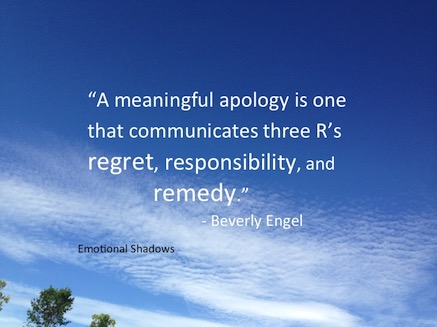
The best apology is to change your behavior:

Change may be hard but only through behavioral changes do we become a likeable person. Is it so hard to change one’s behavior?

  1. We could begin with kindness, the virtue, which is innate, which is like a candle that needs just a spark to get ignited. A kind word spoken with sincerity is always heard.
  2. We could stop making glum faces and smile more often to reassure the other person that our apology was honest.
  3. We could try to be emotionally present during our interactions and keep our digital devices away.
  4. A meaningful conversation melts away many fears and insecurities.
  5. We could respect each other with little gestures of sharing the chores we detest.
  6. It is better to forgive even those who refuse to acknowledge it. Their own moment of understanding the value of apology would hit them one day. Let their age yield them at the altar of forgiveness.

Thank you for reading this. Please share your valuable reflections, as they are much appreciated.

If you have liked this post, please share it at your favorite social networks.

Balroop Singh.

Love That Comes Back

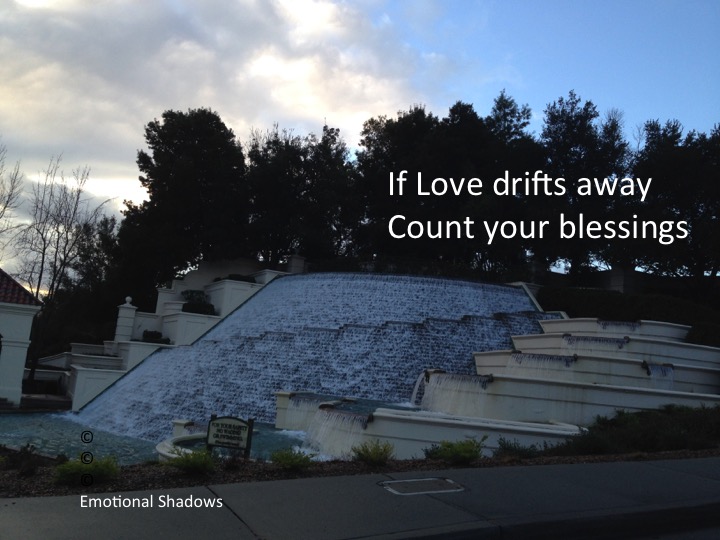
Love returns if it is pure

‘Can you change the music Nana?’ my three-year-old grandson spoke very softly.

The music that plays in my car is always of my liking, soft, romantic and sentimental songs of the 50s and 60s that one could never get tired of.

‘You don’t like it?’

‘We can play it at some other time,’… his answer amazed me! For a moment I thought I was talking to a mature person.

I looked back and both my stars smiled at me.

The distance from their school to our home is hardly two miles and within that much time, they have to share their prattle and listen to peppy music too!

‘Nana, please put it loud,’ he keeps on requesting, oblivious of the fact that soft music would never seem loud.

‘We don’t listen to a very loud music, dear’ I say in my grandmotherly style but my advice goes unheard.

‘Daddy always puts it super duper loud!’ he proudly declares.

I rummage through the old collection of CDs lying in the glove box of my car and stumble upon a peppy mix.

‘I can’t hear anything,’ he says while I am still loading the CD.

‘Wait.’

A squeal hits the roof! Louder! The demand doesn’t wane.

We reach home even before a single song could be heard and in a moment everything is forgotten, with new puddles to jump into and splashing water all over, making bubbles and catching them, pushing and apologising till I announce lunch time.

Time passes by like a whirlwind and everyday we heave a sigh of relief when these express trains go home. The treasured moments we choose to spend with our grandchildren are special because they testify that love returns, empty nest fills again with glee and giggles. I love the expression on their faces when they softly whisper… ‘Nana I love you.’

Each stage of childhood is awesome, each milestone precious, each hug emits the love of the whole world and we are glad we can share it more than their parents who are rushing (like once we did) to meet the challenges of life.

When my children flew out of my nest, I was heartbroken, wondering what is left in life, as our lives seemed to be buzzing only with them.

Slowly we learned to live without them, trying to detach.

This is one of the poems I wrote at that time:

Wheel Of Time…

We search
Those tiny hands, which eagerly held us
Those dainty feet, which needed balance
Those lovely eyes, which emitted brightness
Those soft tears which needed endearment
Those fleeting moments that slipped by.

We take pride in
That unconditional love we shared
That eagerly sought guidance we treasured
That much needed support for each other
That joy of giving
That pain of separation!

We know
The wheel of time moves on
New bonds, new ties ignite
Moments fleet, memories drift, shadows glide
There is always hope
At the horizon we seek.

You search
The future, we search the past
The quest is common, perceptions differ
We soar with you, the flight is slow
We’ll be together
As past merges into future.
© Balroop Singh, 2003
Love comes back

We did soar with them, waiting, hoping and trying to peep into future, which is here!
Another poem that complements the older one:

Love Returns

We have found
Those tiny hands we searched
Those little feet that follow us
Those big eyes that beckon
Those angelic smiles to reckon

We take pride in
New love that is cuddlier
New bonds that clasp us
Delightful moments that glow
Rivulets of respect that flow

Now we know
If it pervades our souls
Love returns in another form
Detachment is just an illusion
It unlocks the secrets of delusion

Let’s not forget
Whatever you give comes back
Selfless and real love returns
Instill the value of love
Pour it in its purest form.
© Balroop Singh, 2018

Time for introspection!

Thank you for reading this. Please add your valuable reflections, they are much appreciated.

If you have liked this post, please share it at your favorite social networks.

Balroop Singh.