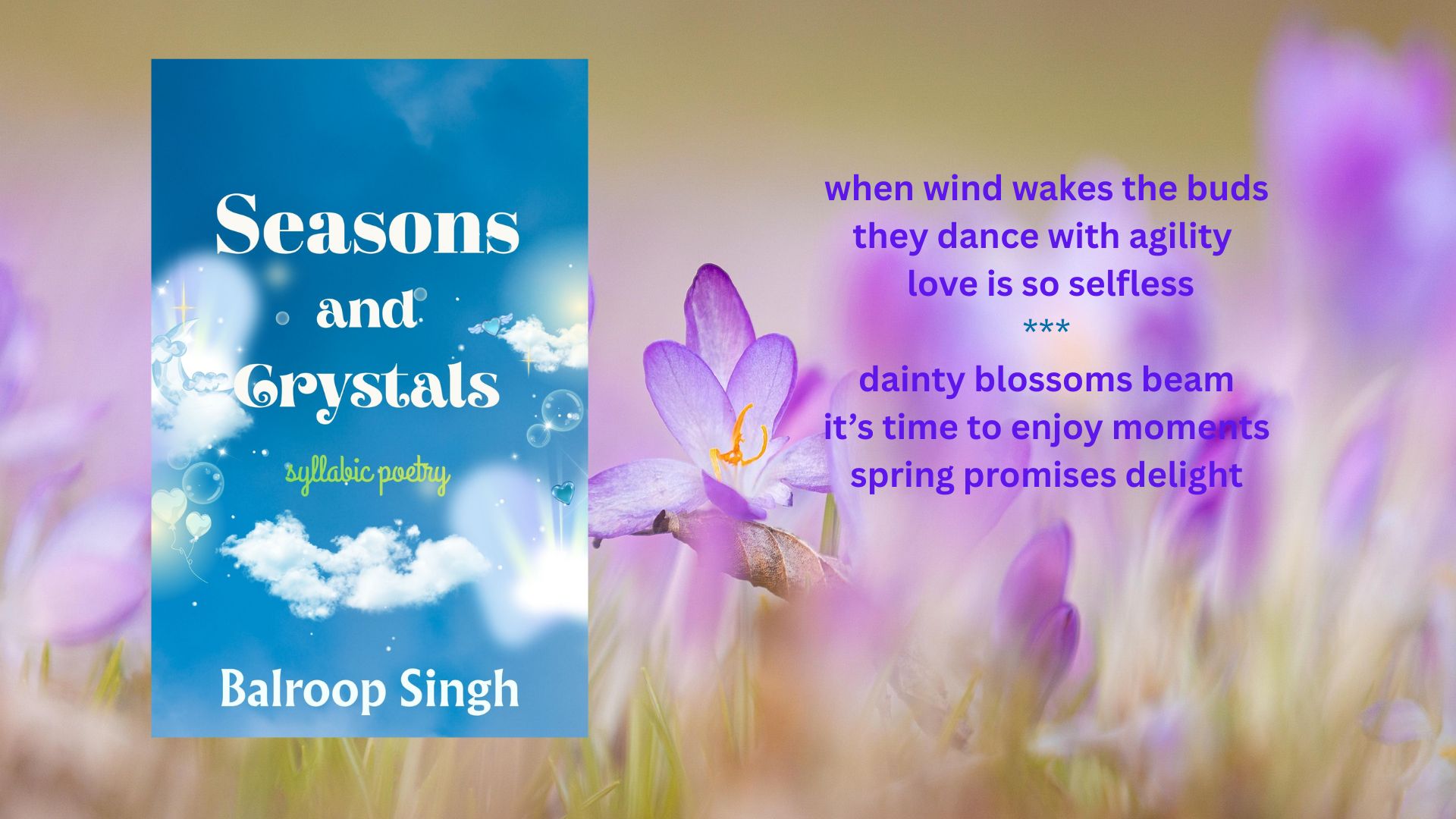

Thanks to Colleen and Willow for the inspiration to write syllabic poetry and try a new form. The challenge this week is “to write a Tricube poem in as many multiples of three-line stanzas as you wish. Please pick your moment and write about your feelings. A word of advice don’t overthink the moment let your words flow.”
A tricube is a 3-line, 3-stanza poem where each line contains exactly 3 syllables.
This ordinary piece of paper Which conceals all… Those unheard words, whimsical wishes Eternal entreaties, abiding aspirations A dazzling display of words May seem insignificant to you.
This letter – the last attempt to persuade you, To remind you Of the moments etched on our hearts, Of the hours that walked with us, Of the words that ignited us, You know them so well.
Her fingers yearn for Mama’s hands But she holds a cold device It doesn’t offer any love Her lullabies emanate from nowhere As empty as the walls around her.
Still struggling with the new device, her glum face divulges all. She likes to watch the story of ships, Stranded on the orange sea — A sea that swallowed her dear dad.
No one told her he’ll never return She’ll wait for eternity. Muted by neglect and apathy She doesn’t know a smile, or the warmth of an emotional anchor.
Grief has been my oldest pal or should I say the ghosts of grief could never leave me. It is one emotion that can never be suppressed. I’ve always poured it into my poetry. So, when I saw Kaye’s book that talks about personal grief, my ghosts of grief resurfaced to speak to me. I could deal with them within one day, could write two poems and finish reading this new release of my blogger buddy within a day. I could feel her words.
My Review:
A journey through grief is a torture that can never be explained yet Kaye gathers the strength to talk about it, as it is cathartic; it provides inner strength and gives a reassurance that grief may be personal but not individualistic. Grief changes us, it alters our life and we wonder where are the friends and family who disappear after the funeral. It is a deserted path and we have to traverse it alone. “Grief never leaves, it just finds its way into a comfortable spot within.” I could relate to these words of the author. We have to learn to live with it.
In this book, Kaye calls grief “a disease” and urges grievers to pay attention to their health. They should get out and go for a walk, talk to people, as human connection at such a time is extremely important. We may be sad and unmotivated, but we have to take up some activity to get out of the darkness, and find a new way of living. Another meaningful advice is that It is better to face the grief demons than become susceptible to addiction of any sort.
Real Stages of Grief may be different for each griever; we may seek a comforting hand, but solace eventually comes from within. “It is not words we need in our hours of grief; it’s an ear and hugs,” says Kaye. However, she warns against scammers and lurkers who want to be friends with you. “Beware of sob stories from those seeking financial gain.” Many more significant aspects of grief, and ways of emerging from those dark alleys have been shared in this book. ⭐️⭐️⭐️⭐️⭐️
HAPPY READING!
A Haibun
Perennial Pain
It’s the third Diwali without you. Darkness still surrounds me. Frozen heart refuses to accept logic; numb eyes return to the door again. I know you are not here but I don’t want to light any diyas or any electric lights. Diwali wishes sound like a slap in the face. Do you remember my enthusiasm for burning crackers and eating sweets the whole day? I don’t want to buy any now. I just soak in the mist of those memories. I have no nepenthe, but darkness gives more solace than the artificial lights.