Silence Is Powerful

Recently I stumbled upon an enlightening book and would like to share some nuggets of wisdom that I gathered while reading it. I quote volubly from the book and also add my own observations.

Silence: The Power of Quiet in a World Full of Noise by Thich Nhat Hanh exhorts us to find silence within ourselves. If we try, we would hear five sounds:

“1. The sound of the wonders of life that are calling you. (Sound of the birds, rain etc.)

Everything begins with a sound.

2. The sound of the One who observes the world. This is the sound of listening, the sound of silence.

3. The third sound is the Brahma sound – the transcendental sound, connected with spiritualism in Indian thought.

4. The sound of the rising tide.

5. The fifth sound is the sound that transcends all the sounds – the sound of impermanence, a reminder not to get attached to particular words or sounds.”

In the journey of life, how many of us have heard these sounds? Do we even know about them?

Do we introspect? Do we ponder about our activities, our purpose of the way we are living our life?

I am sure every one of us has heard the first kind of sounds but do we hear the call? Do we pay attention to them?

We also know the fifth sound so well yet never recognize its impermanence. 

There is a “small voice” – the inner voice that is often hushed by us. If we listen to that voice, it could unravel many desires that have not been paid any attention to.

Joy comes from listening to the inner desires that get drowned in the humdrum of life.

“We are what we feel and perceive. If we are angry, we are the anger. If we are in love, we are the love.”

Individual consciousness is required to eliminate toxic elements (anger, fear, despair) from our consciousness. It can be cultivated.

Conscious breathing is a good way to nourish body and mind with mindfulness.

Mindfulness is the practice that quiets the noise inside us. Noise of memories, of experiences, of past regrets, of uncertainty about the future… the list is endless.

Mindfulness too can be cultivated. It is not an easy task but also not unattainable.

“There is a radio playing in our head: Radio Station NST: Non Stop Thinking.” Mindfulness helps in silencing this non-stop station.

“Silence comes from the heart; it doesn’t mean we have to sit quietly.” No. It means learning to control the internal chatter, to calm the mind by “changing the way of your thinking and way of your looking.”

It is this chatter that prevents us from listening to ourselves or any one else. Only when we

“listen deeply to ourselves, can we listen to others. Take some time each day to listen with compassion to your inner child, to listen to the things clamoring to be heard. Then you will know how to listen to others.”

Four mantras to cultivate deep listening and presence in your relationships:

“1. I am here for you.

2. I know you are there, and I am very happy.

3. I know you suffer; that’s why I am here for you.

4. I suffer, please help.”

I have tried to condense a 225-page book into a short post to convey the most significant points that highlight the power of silence.

Thank you for reading.

Balroop Singh.

If you like poetry,  check my latest book: Magical Whispers

My Creative Cave

Image from Pixaby

My creative cave
Is open from both sides
Starry nights spread their tresses
When sun wanders away.

My heart tingles with delight
When the glow of moon
Creates magic in my cave
My pen drapes around the light.

Emotions echo
To release the words
Oppressed by feral fears 
Creativity cedes her hold.

Till dawn breaks
Bringing dewy-damp whispers
And melody of flowers
A new song reverberates.

A song in synch with the surroundings
A song that soothes many hearts.
© Balroop Singh, June 2021

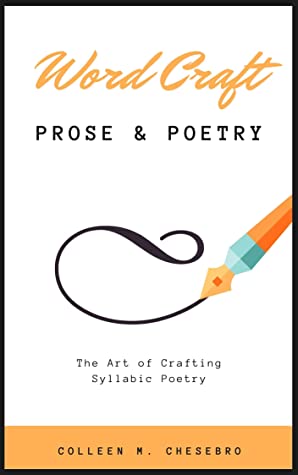
If you like poetry,  check my latest book: Magical Whispers
You can click here for more poetry.

#Bookreviews #Prose & #Poetry

Last month I’ve read and reviewed eight books but these two stood out due to their unique format and style. So I must share them with you.

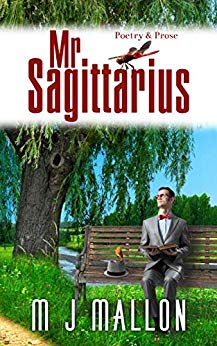
Word Craft: Prose & Poetry by Colleen M. Chesbro is an excellent reference book for budding poets who want to learn the art of writing syllabic poetry. From finding poetic inspiration to exploring ideas, discerning your sixth sense and discovering your interests, this book is a perfect guide to writing haiku, tanka, haibun, renga, cinquain shardoma, nonet and many more. Along with the definition and details of each form, there are tips about how to write various forms of poetry. Some brilliant examples add more charm to this book.

Reading this book has been an enlightening experience for me as, I had no idea about how a gogyohka or an etheree is written and that a senryu focuses on the awkward moments of life and does not deal with sentimentality. Chesbro’s pithy style is noteworthy and the clarity of her thoughts could hone the writing skills of even a beginner. Syllabic poetry and its discipline have always scared me but this book infuses a new confidence. All poetry lovers must keep this book on their desk. Highly recommended.

5 stars!

Mr. Sagittarius by M.J. Mallon is a perfect blend of fantasy and realism, poetry and prose that holds magical qualities. Short and sweet, the story of Harold and William highlights attachment to beauties of nature and loved ones. Annette’s presence holds the key to emotions that link us to each other. Mallon’s style of connecting human relationships with willow tree, dragonflies and flowers shines through out the book.

‘The Old Man of Snow and the Snow Snake’ may appear to be a fabulous fantasy but is a magnificent comment on the avarice of man, eager to plunder nature. ‘Bubble Monster’ is a delightful tale of talking bubbles, with a child-like charm but conveys a serious message – “atmosphere is everything.”

‘My Heart is a Cave’ is beautiful and poignant; as it brings out the loneliness of a sibling who is yearning to be reunited with her loved ones. Attachments cling to us. Mr. Sagittarius could forget the names of his lovers but remembered his orchid, his Ruth and his ballerina – all natural beauties! Just within an hour, this book would fill your heart with warmth that would linger around you for a long time.

5 stars!

Thank you.

Balroop Singh.

If you like poetry,  check my latest book: Magical Whispers
You can click here for more poetry.

An “Eccentric” Historical Figure

This post is inspired from Robbie’s Open Book Blog Hop – A historical figure who interests me.

Have you heard about an eccentric king – a paradoxical personality?

Known as “the inhuman eccentric” and “a man of knowledge” who had an interest in subjects like philosophy, medicine, mathematics, religion, Persian and Urdu/Hindustani poetry, Muhammad bin Tughlaq, the sultan of Delhi from 1325-1351 is the most fascinating historical figure. He is famous for his bizarre, illogical and impractical decisions that earned him the title of a “crazy” king. It is astounding to note that he could rule for 25 years despite his wild policies.

In contemporary times, Tughlaq is a term still used to tease someone when they do something illogical or counter-intuitive.

What did he do to earn such titles?

  1. He ordered to move his capital from Delhi to Daulatabad and told all the citizens to move to the new capital. In the process, many died on the road due to hunger and exhaustion. (1327)

2. Just after eight years, in 1335, due to political repercussions, he decided to shift the capital back to Delhi, allowing the citizens to return to their previous city. Isn’t it crazy?

3. He allowed the use of token currency, that means coins of brass and copper were minted whose value was equal to that of gold and silver coins. As a result, the value of currency declined and the coins became as “worthless as stones.” Anybody could mint them at home. Nobody could distinguish between the official and the forged coins.

4. He increased the land revenue tax at a time when the Doab region was facing famine, thereby antagonizing his own people.

5. He lost an army of 10,000 soldiers (who perished in the Himalayas) due to poor planning of Karajal expedition.

However, many historians believe that he was a “visionary and a reformer” but lacked the ability to implement his plans.

Ironically, there is no dearth of such personalities in modern times too! It is easier to have a vision.

If you want to join Inlinkz link party, Click here to enter

Thank you.

Colleen’s Ekphrastic #PhotoPrompt

OLYMPUS DIGITAL CAMERA:  Trent McDonald, photographer

I embody desires
My power can never be calmed
I breathe moments
That flow through timeless terrain
To add glory to wilderness.

***

I race like thoughts
Yet I could calm a myriad mind
I heal without words
Hopes crumble into me 
To create a balm for souls.

***

Thanks to Colleen and Trent for the inspiration.

Do you like nature poetry? Hear the whispers…

Check my latest book: Magical Whispers