I am delighted to welcome Jacqui Murray, my blogger friend, who has just released her third book in the Crossroads Trilogy:
Xhosa’s extraordinary prehistoric saga concludes, filled with hardship, courage, survival, and family.
I have read and reviewed all three books, which record a fabulous history of tribes of those times, (850,000 years ago) about which there is no conclusive evidence. So the arena is open for writers to explore and Jacqui has made a brilliant effort.
Book Information:
Title and author: Against All Odds by Jacqui Murray
A million years of evolution made Xhosa tough but was it enough? She and her People finally reach their destination—a glorious land of tall grasses, few predators, and an abundance that seems limitless, but an enemy greater than any they have met so far threatens to end their dreams. If Xhosa can’t stop this one, she and her People must again flee.
The Crossroads trilogy is set 850,000 years ago, a time in prehistory when man populated most of Eurasia. He was a violent species, fully capable of addressing the many hardships that threatened his survival except for one: future man, a smarter version of himself, one destined to obliterate all those who came before.
From prehistoric fiction author Jacqui Murray comes the unforgettable saga of a courageous woman who questions assumptions, searches for truth, and does what she must despite daunting opposition. Read the final chapter of her search for freedom, safety, and a new home.
A perfect book for fans of Jean Auel and the Gears!
My Review:
Against All Odds concludes the Crossroads Trilogy – an enthralling story of Xhosa and her People, the prehistoric inhabitants who possessed astonishing abilities to create tools out of stones and twigs, developed a communicative bird language and could face unknown hazards fearlessly. They were smarter than other tribes, as they could share their ideas and thoughts through hand gestures, facial expressions and sounds. They learnt from other communities, were adaptable and their intuition was stronger than others.
It is interesting to note some innate emotions amongst early dwellers. Despite the challenges they had to face and develop confidence, strength and ferocity, Pan-do considered himself more than just a father, a protector and food provider. He knew what is love, which he described as “caring for another beyond logic and reason.” He could even see a similar emotion between his daughter Lyta and Seeker. Hope too finds a mention many times. Each time somebody went missing or was captured by an enemy, they hoped that they would be reunited. Mbasa knew she would surely meet Xhosa again. Ngili hoped that he would be reunited with Hecate.
Jacqui’s research shines through out this book too and her foreword answers many questions about tribes and their ways of expression. Her characters have grown with the passage of time and remember their leader Xhosa’s advice to be “strong like Mammoth, patient as Eagle, leery like Gazelle, cunning as Wolf or lacking that, wise enough to mimic someone who is.” Murray has created awe-inspiring female characters who never give up in adversity, never look back and forge ahead with renewed vigor after each battle. If you like prehistoric fiction, you must read the Crossroads Trilogy. Though this is a stand-alone book, with references to earlier ones but they should be read in order.
Meet the Author:
Jacqui Murray is the author of the popular Building a Midshipman, the story of her daughter’s journey from high school to United States Naval Academy, the Rowe-Delamagente thrillers, and the Man vs. Nature saga. She is also an adjunct professor of technology in education, blog webmaster, an Amazon Vine Voice, a columnist for NEA Today, and a freelance journalist on tech ed topics. Look for her next prehistoric fiction, Laws of Nature, Book 2 in the Dawn of Humanity trilogy, Winter 2021.
I have been writing poetry, deriving solace from the spring, heralding change – a brilliant reminder that nature remains untouched despite the encroachments that have been made on her beauty.
The fiery touch of Corona virus that nature has sent to show who is in command, is just the beginning of a new era for mankind who didn’t bother to heed the warnings. William Wordsworth’s prophetic lines come to my mind:
“To her fair works did Nature link The human soul that through me ran; And much it grieved my heart to think What man has made of man.“
I’ve kept my cool by keeping my thoughts positive, by reiterating the message of the universe that nothing is permanent.
I’ve been listening to music more than the news to keep my sanity.
I come from the family of doctors and many of my dear ones are directly involved in the task of offering their services, I call them the soldiers of present times and salute all those who are fighting the monster called Covid – 19.
We shall overcome is the refrain that rings in my ears everyday.
Mother nature has been too kind, ‘we should never take anything for granted,’ we heard that phrase a thousand times but never paid any attention. We need to respect her message and her creation.
Remember, we are doing no honor to her. We are doing all this for ourselves, to save us and keep our dear ones safe.
After paying for our negligence, we would get another chance. That’s the law of nature. As a renowned urdu poet Sahir Ludhianavi wrote, “Raat bhar ka hai mehmaan andhera, kiske roke ruka hai savera…” (Translation: Darkness is just a guest of the night, who can hold back the morning?)
Poetry is said to be good for the soul, as it soothes our emotions, helps us dig deeper into thoughts and dreams and makes us discern the aesthetic pleasures around us. If you avoid poetry and prefer thrillers, probably you have never been exposed to the love of reading a good poem.
Nurturing the love for poetry starts in childhood. If you are a parent, read a poem everyday with your child. Ask the child what s/he likes about that poem. If the child likes it, don’t hestitate to read it everyday but add another one. Begin with simple and short poems.
Encourage your child to collect little poems and make a scrapbook. You can browse poems for kids online. Think about your favorite poets and poems you liked as a child or as a youngster. Share those thoughts with your children or siblings. Discuss what makes you like poetry.
Encourage your child to write a short poem. Bette A. Stevens offers excellent guidelines for writing haiku (an unrhymed poetic form consisting of 17 syllables arranged in three lines of 5, 7, and 5 syllables respectively.)
Why is poetry disliked? Whenever this question haunts me, I try to look back to search some answers. The only poetry we were exposed to in schools, was the rhymes and that too in Kindergarten.
While reading story books is stressed upon but good poetry books are not easily available. Either they haven’t been written or their level is too high to be understood by children.
Some poems that we meet in textbooks fail to inculcate the love for reading of more poetry though ‘Mr. Nobody’ stayed in my thoughts and I love it even today.
Here is the fun poem: I wish more such poems could be written!
Mr. Nobody
I know a funny little man, As quiet as a mouse, Who does the mischief that is done In everybody’s house! There’s no one ever sees his face, And yet we all agree That every plate we break was cracked By Mr. Nobody.
’Tis he who always tears out books, Who leaves the door ajar, He pulls the buttons from our shirts, And scatters pins afar; That squeaking door will always squeak, For prithee, don’t you see, We leave the oiling to be done By Mr. Nobody.
He puts damp wood upon the fire That kettles cannot boil; His are the feet that bring in mud, And all the carpets soil. The papers always are mislaid; Who had them last, but he? There’s no one tosses them about But Mr. Nobody.
The finger marks upon the door By none of us are made; We never leave the blinds unclosed, To let the curtains fade. The ink we never spill; the boots That lying round you see Are not our boots,—they all belong To Mr. Nobody. – Walter de la Mare
Whenever a door squeaks, I think of Mr. Nobody!
Poems for children and middle schoolers have to be short and simple. The following poem by Robert Frost could speak to them if imagery is explained by the teacher:
Fire and Ice
Some say the world will end in fire, Some say in ice. From what I’ve tasted of desire I hold with those who favor fire. But if it had to perish twice, I think I know enough of hate To say that for destruction ice Is also great And would suffice. – Robert Frost
Love for poetry is also connected with how well the poems are taught by our English teachers. Some just read them and inspire children to analyze. While it may be good for developing critical thinking, discussions have to follow to share the opinion of others.
Creative writing workshops in schools that focus on poetry writing develop sensibilities at an early age. Do you have any memories of writing poetry in your school?
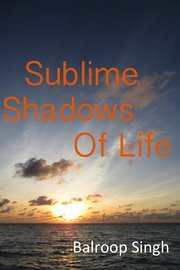
In honor of National Poetry Month, two of my poetry books are being offered for just 0.99 cents. If you love poetry, grab your copy now. Thank you. Please share this post at your favorite social networks.

 Meet the Author: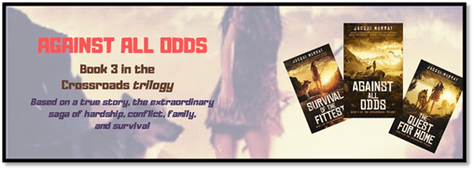



 Emotional Shadows