How Unspoken Words Harm Our Personality And Relationships

Unspoken words

A spoken word is better than those, which are kept within the heart. Unspoken words keep struggling; they create negative images in the minds of people who want to hear them and who keep suppressing them.

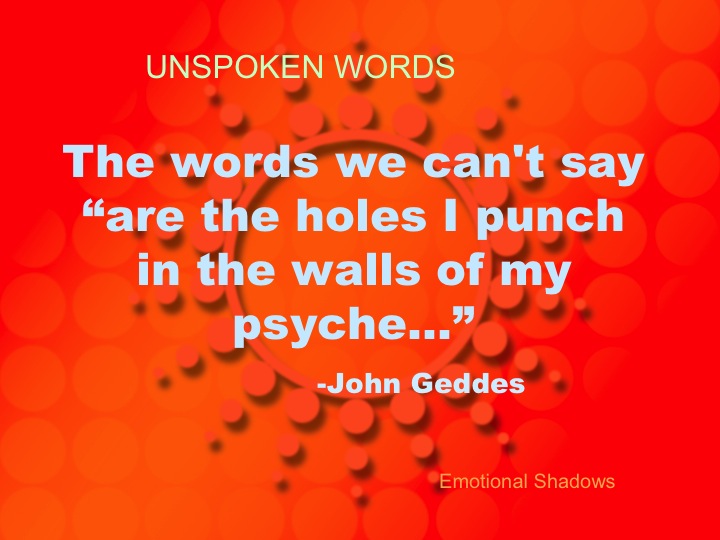
The words we can’t say, observes John Geddes “are the holes I punch in the walls of my psyche…” They keep growing deeper and wider with time. The unspoken words keep falling into those holes and it becomes hard to retreat them.

Unspoken words hurt. They hurt not only you, as they are emotionally strenuous but they are painful for those too who expect them to be shared. The silence keeps growing with each passing day till it becomes a habit.

You keep burying all your secrets, all the plans, even those well-intentioned ideas within your mind and when they tumble out, they provoke an untold psychological trauma for your own loved ones.

They wonder what is their role in failing to get closer to you; they start doubting their own love and misunderstandings start budding. They can never get sorted out if words remain unspoken.

Unspoken words carry emotional baggage. When feelings and emotions are not shared, they create an unknown wedge between relationships. They breed anger and angst and there is no limit to these negative emotions.

Non-communication can lead to serious rifts and it is one of the major reasons of drifting apart. Emotions need an outlet, a channel that makes them flow spontaneously.

Emotional outbursts are better than carrying an emotional baggage.Unspoken words

Repressed emotions are like a volcano and unspoken words become a lid for them. I am sure you can understand what happens when a volcano bursts!

Unspoken words create negative energy, which keeps on multiplying as people wait for the right time to share their feelings. Such a time never comes, as the right time is that moment when you feel like saying something. Once you suppress those words, you become adept at doing so each time.

Negative thoughts often change our personality as we become skeptical. Even the right-minded people, the well-wishers seem threatening and we want to shove them out of our lives.

Unspoken words conceal your real personality. How do people know about you? It is only through our words that we share about various topics and issues that others form and opinion about us. Even introverts interact with words, which may be too less!

Unspoken words make us seem hypocritical. Others get an opportunity to judge our personality according to their own perspective. If we don’t make an effort to be friendly or nice, people draw their own conclusions about us, which may not be always accurate.

Why people hold words?

  •  They don’t want to hurt others
  • They want to hide their feelings
  • They may be having some secrets
  • They could have been snubbed in childhood
  • They could be cynical or hypocritical
  • They could have been trained to do so

You can understand very well that it is all about the molding of personality, which is influenced by various factors. Whatever the reason may be, unspoken words affect us eventually. They lead us to breaking down of ties; leave us rudderless in the sea of relationships.

Do you hold your words? Is there any other reason for that? I would love to hear your views.

If you have liked this article, please share it at your favorite social networks.

Thank you for your support. Please add your valuable comments, they are much appreciated.

© Balroop Singh.

How Culture Molds Our Personality

cultural conditioning of personality

We may be born with a personality but it is molded by the environment and the social structures we dwell in. It is refined in the cauldron of cultural and social heritage, which affects each and every aspect of our life.

Cultural norms dictate our upbringing as we pick up the beliefs, values, attitudes and prejudices unconsciously from our families, friends, ethnic groups and society.

Early childhood experiences leave a profound impact on our personalities. Closed and conservative societies send a mute message to the child not to explore anything independently, thereby curbing the free spirit, which a child is born with.

Cultural conditioning starts the moment a child is born, the way he is christened, fed, educated and raised.

When the diktats of culture expect a child to follow certain set rules of a society, which fail to distinguish between the aptitudes and aspirations of an individual, which expects all the persons to stay within those boundaries – such families often raise introverts, serious and quiet individuals who are conditioned to be cautious at each step.

They grow up to be huge supporters of tradition and culture that they have imbibed. The chain of thoughts and ideas continue to be passed on to the next generation and that’s how certain redundant traditions continue to thrive.

When we grow up in a free and unrestricted surroundings, where there are no rules for wearing a particular dress or studying a compulsory subject, where swimming lessons are a norm for every child, we develop into original thinkers, independent, analytical, adventurous and determined.

Such persons become natural leaders, with the urge to accomplish all that they can conceive. They have a mind of their own and can never be misled by anti-social elements.

A competitive culture raises extremely ambitious children because the prodding to do better than the challenger in his peer group infuses a spirit of pursuing success aggressively. The enthusiasm to excel gets embedded in their personality.

They become highly successful, practical and conscientious workers. They can inspire many more to be like them.

A creative culture encourages children to develop their own exciting ideas and beliefs. When children are given the liberty to explore their own fun oriented activities, when their minds are not loaded with pre-conceived tasks, discovering and learning becomes a part of their personalities.

Such children grow up to be innovative artists who can be creative as well as idealistic. They are very adaptive, kindhearted and sensitive.Personality

Hardworking culture brings the best out of children and train them at a very early stage to understand the dignity and value of work. Those who grow up with this culture around them tend to respect all kinds of work, are very helpful and cooperative, responsible and reliable.

However they miss on the leisurely aspects of life, as they are always eager to accomplish their goals. Since they are trained by difficult and harsh surroundings, they are highly resilient and flexible. Perseverance and loyalty are the hallmarks of such a personality.

Religious culture gives a distinctive shape to the personality, which has definite leanings towards duty and devotion. Children who are exposed to scriptures and places of worship at a tender age tend to become believers, some of them follow religious decrees blindly and lose their logical and analytical bent of mind. They may be submissive but stand firm with their beliefs, they may be abstemious and compassionate but are very sensitive towards their principles.

Such individuals develop a positive outlook, cultivate self-discipline and are laid back. They drift into their flock and can be easily misled into fanaticism. They can become fiercely active if they are exhorted in the name of religion.

Music culture in the homes produces extremely perceptive and patient individuals. They are driven by emotions; their passion for melody and harmony makes them highly creative. Mundane life doesn’t interest them, as they like to soar with their imagination. They are individualistic and like to follow their intuition.

What kind of personality do you have? Have you been influenced by any such culture? I would love to hear your views.

If you have liked this article, please share it at your favorite social networks.

Thank you for your support. Please add your valuable comments, they are much appreciated.

Balroop Singh.


How Emotional Vibes Of Colors Affect Our Personality

Color quotes

Colors have always fascinated me as they are directly linked to emotions. Bright and happy colors spread vibes of ecstasy all around. They accentuate our celebrations and merge into our moods.

Colors respond to emotions and moods intuitively. They lend a new perspective to our lives.

It has been our tradition to wear bright colors for happy occasions to add that extra merry tinge to them. Muted colors are chosen for somber occasions.

My fascination for colors started very early, as I liked to paint more because I could play with various colors, mix them and create my own wonderful shades.

Growing up with the colors of my little garden made me understand and respect their significance. Watching flowers and butterflies was my favorite past time. Much of my love for nature is connected with the colors.

When Leigh Hunt said, ‘Colors are the smiles of nature’, he must have felt the emotional vibes of colors.

I learned to smile from colourful flowers, the rainbow and the sunset.

Colors of nature are more alluring as their hues change in the most natural manner.

Have you noticed the colors of the sky and the clouds…the dawn, the dusk and the dark clouds?

Gray may be a drab color but it keeps us riveted till thunder and lightening shake us out of our reflections. Its association with rain makes it all the more meaningful.

Gray also defines our romantic temperament!

Green, the most soothing and harmonious color binds us with Mother Nature. It emits positive vibes of growth, giving, prosperity and all embracing emotion. The exquisite attachments it creates are eternal!

I wonder how it fell into the hands of jealousy. Shakespeare’s ‘green-eyed monster’ doesn’t relate to the upbeat vibes of green color.

color quoteBlue color carries the vastness of the sky and the depth of the oceans, it breathes serenity and contentment and its shades merge all the emotions of fear, hope and trust.

Blue evokes divine blessings and infuses us with unflinching confidence when we say… ‘Sky is the limit’!

“Red is such an interesting color to correlate with emotion because it’s on both ends of the spectrum. On one end you have happiness, falling in love, infatuation with some one, passion, all that. On the other end, you’ve got obsession, jealousy, danger, fear, anger and frustration.” – Taylor Swift

Red has been my favorite color… how it got associated with danger, fear and anger is difficult to understand as red roses symbolize love and passion.

It is the most vibrant color that helps us thrive, the color of our blood, symbolic of life and energy.

A bride in Asian countries wears Red, which is the color of celebrating new sensitivities and relationships.

Red carpet welcome denotes honor, respect and grand reception but at the same time a red card or a red flag changes the whole vibrational frequency of this color!

The meaning and significance of many colors change according to places, cultures and circumstances.

The paradoxical uses of white are amazingly enigmatic.

White may be a color of purity, faith and innocence but it is worn at the weddings as well as funerals!

Black is as perplexing as white as it represents different meanings for people, occasions and cultures. A symbol of grief, it is also preferred for formal parties with great penchant.

When the night is black, the silvery white moon illuminates it with its unique color…its emotional appeal reaches many hearts and inspires the poets!

Yellow and orange, the beautiful colors of fall, of Sun and sunshine… a symbol of love, happiness, hope and heat. They blend into the blue to create a heavenly mesmerizing scene at the beginning and end of each day.

Ironically, they are also associated with fire, denoting danger but it was fire that introduced man to new avenues of progress.

Do you know we have only three primary colors? Red, yellow and blue.

All other colors are created from the combination of these colors. They are mixed and muted to create various shades for summer, winter and spring.

Do you know colors can change our emotional responses and our appearance? They can make us look happy or sad, heavier or lighter, romantic or boring!

If you want to see a riot of colors, visit India. Some of the states like Rajasthan, 532740_10150932713366007_1354189198_nPunjab and Gujarat are a living example of the brightest outfits, worn without any second thought.

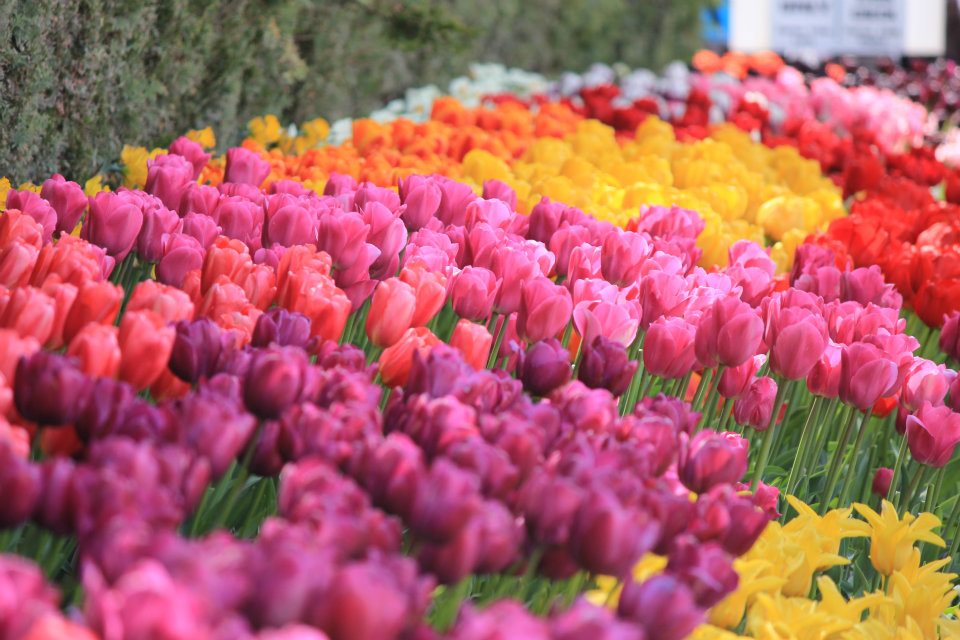
Tulip gardens too present an outstanding specimen of how much colors attract us and affect our emotions.

What are your favorite colors? I have always loved the shades of pink and red and magenta. They keep me buoyant all the time!

If you have liked this article, please share it at your favorite social networks.

Thank you for your support. Please add your valuable comments, they are much appreciated.

Balroop Singh.

How Passive Aggression Can Be Harmful For Your Personality And Relationships

Passive aggression

Aggression has been defined as a ‘hostile or violent behavior’ towards others and when it becomes passive, it is extremely detrimental because it does not manifest itself, it remains under the surface and the façade of goodness misleads us till the simmering emotions overflow into a big explosion.

Such a behavior can be quite confounding for a layman.

According to Kendra Cherry, a Psychology expert, “The phrase passive-aggressive is used to describe behavior or a personality trait that involves acting indirectly aggressive rather than directly aggressive. Passive-aggressive people regularly exhibit resistance to requests or demands from family and other individuals often by procrastinating, expressing sullenness, or acting stubborn.”

The American Psychiatric Association’s Diagnostic and Statistical Manual of Mental Disorders (DSM) has classified passive-aggressiveness as many things throughout the years. It’s been called a “personality style”, “hidden hostility”, a “defense mechanism”, a “personality disorder” and “negativistic.”

How do we recognize such persons who may be around us – in the form of our near and dear ones? Some of the obvious signs may be glaring at you.

Signs of Passive Aggressive Behavior:

  • They are non-communicative and avoid dialogue.
  • They lack assertiveness.
  • Silent hostility and emotional blackmail is their weapon.
  • They avoid confrontation but are good manipulators.
  • They conceal their true feelings for a long time.
  • They fail to see reason and logic, even when explained.
  • They have no respect for others’ emotions.
  • They can be quite self-centered and vindictive.

Kelly often talks about renouncing this world. She wants a simpler life; she wants to calm her mind down as peace of mind has always eluded her.

She has made every possible effort to attain it within the confines of her home and culture. A vivacious and beautiful woman, she possessed the most captivating smile and could charm anybody with her personality…a disposition, which had been nurtured by the values of care, love, loyalty and integrity, so rarely found in the modern era of self-love.

A victim of passive aggression for almost ten years in her own home, she has been making the best possible efforts to deal with it but it has affected her own psyche so deeply that she is at the brink of a breakdown.

That is how passive aggression hurts, not only one person but also all those around us.

It spreads negative energy:People

People who are passively aggressive hold a lot of negative energy within themselves and it molds their thoughts. Since they choose to withhold all those feelings of anger and resentment within their heart and carry themselves, wearing a mask of pretended goodness, it cannot reach anybody. Negative vibes are strong enough to filter through their persona and can be felt by friends, siblings, spouse etc.

It fails to address practical problems:

Passive aggressive people evade real life problems and procrastinate, which keeps on building. Any work, which needs immediate attention, is deliberately ignored to prove their imaginative point because nobody could know what is going on in their mind. They behave as if they are absolutely comfortable with people they dislike, as they believe that they can solve their problems in their own silent way but they fail miserably.

It blocks communication:

When interaction with each other falls apart, when feelings and emotions are not discussed with an open mind and heart and when others are expected to determine the reasons of passive aggression, an untold harm is caused to both who display this behavior and those who have to bear the brunt of their attitude. Lack of communication is very unhealthy for relationships.

It ruins relationships:

Happy relationships thrive on a good, honest and truthful demeanor, which is given a boot by passively aggressive people. Since they have the tendency to do everything secretly and could lie to cover up, it becomes extremely damaging for relationships. Their façade gets exposed sooner or later as it is impossible to befool the people around us with whom we spend a considerable period of time.

It creates distrust:

Such people lose the trust of their closest possible kin, as their fake nature can be well understood. Can you rely on such a person who hides his real feelings and emotions? Once the trust is lost, it is very difficult to restore it. Even the honest intentions of such a person can be doubted, thereby making him/her vulnerable.

Passive aggression is like a volcano, waiting to burst when the anger becomes unbearable. Such a person needs empathy and therapy albeit he may resist all your efforts.

How to help yourself:

  • Self- talk to build up your confidence, keep your thoughts positive and your hope alive.
  • Keep your emotions especially anger under control to deal with such people.
  • Share your thoughts and emotions with a trusted friend or sibling.
  • Discuss and try to make the passive aggressor aware of the harmful behavior.
  • Seek professional help and therapy to keep the relationship alive.

Nothing can change overnight. Patience and consistent efforts to deal with such behavior may bring some positive results.

It is very easy to abandon such persons, as they would never even ask you the reason. However if they happen to be important in your life, you are in for some tough challenges.

Do you know any such people? How do you react to them? Do you possess any traits of passive aggression? I would love to hear your views.

If you have liked this article, please share it at your favorite social networks.

Thank you for your support. Please add your valuable comments, they are much appreciated.

Balroop Singh.

When We Gather The Courage To Step Out Of Our Comfort Zone…

Comfort Zone

All people don’t possess that courage, sometimes we are dissuaded by circumstances or some fears that lurk around keep warning us, whispering into our ears…is it that essential…aren’t you comfortable?

Do you know that ‘comfort zone’, though alluring is quite detrimental? It blocks our mind. It restricts our thinking. It encourages procrastination. It impedes our way to success.

Before we convince ourselves to step out, time flies, life passes by and we realize it is too late.

Too much of comfort makes us indolent and we start accepting life as it unfolds. We stop taking the risks. We forget that life is like a stream, not a lake, however beautiful it may seem.

I know a woman who believed in taking life easy. She never had any big goals; she was very fond of socializing and traveling. A fun-filled life motivated her more than her books. She had never taken her school and college assignments seriously, she had such friends who took pleasure in watching movies and organizing parties. She was not interested in balancing her life.

She happened to start her career as an elementary school teacher, just to earn some pocket money and that gave her great satisfaction. She had never thought beyond that but she happened to marry a very ambitious doctor, whose main interest was a successful profession. He tried to motivate her, persuade her and advise her to take her profession seriously. He reminded her that she was highly qualified.

Let’s call her Shimmer. She didn’t pay any attention to all that pep talk, which she had to hear every single day. She wanted to live in her comfort zone. She thought she wouldn’t be able to handle more than what was in her hands. She got a better break in a high school, which was nearer to her home and her daughter too could study there, so Shimmer changed her job, which seemed to be the best one to her, now.

The awakening hit her one-day when during an argument about her job; she was mocked at for being an ordinary teacher. This hurt her deeply because she knew she had never explored her capabilities. She knew she could accomplish whatever she wanted to.Comfort Zone

She just had to step out of her comfort zone! That off-the-cuff remark proved to be a defining moment for her career. She took up the challenge to prove her worth.

She applied for the top positions at various schools and got picked up by an upcoming school at the young age of 32. She never looked back. She took a fledging institution to envious heights. People of her age looked up to her for inspiration.

Self-belief can take you to unimaginable pinnacles. We just have to tap the power within us; we just have to gather the courage to step out of that comfort zone, which disempowers us.

Shimmer had never made any endeavor to check her potential. Many people are trapped in such situations. They never feel motivated to go beyond the ordinary to see what lies ahead.

The same carefree person, fond of a lot of leisure and fun has completely changed. Now her comfort zone is her school, her students and all those responsibilities, which she carries out most sincerely.

She happens to be my younger sister!

From an elementary school teacher to the illustrious Principal of a renowned school, the journey was quite smooth because a new challenge inspired her to step out of her comfort zone.

When we step out of our comfort zone:

  • We can work on those long forgotten dreams.
  • We can find new untrodden paths.
  • We can rediscover ourselves.
  • We meet new and interesting people.
  • We encounter new challenges.
  • We learn with every endeavor.
  • New avenues of growth unfold before us.

“We cannot expect to grow if we are too afraid or unwilling to change and face challenges. When we exit our everyday, mundane lifestyles to do something different we can experience growth, undiscovered strength, and new abilities within ourselves.” – Ashley Ormon

All we need is a little push but that has to come from within. It is our own inner voice that can nudge us and infuse new verve into us.

Do you lack that valor? Are you dwelling in your comfort zone? What inspires you? I would love to hear your views.

If you have liked this article, please share it at your favorite social networks.

Thank you for your support. Please add your valuable comments, they are much appreciated.

Balroop Singh